The short answer
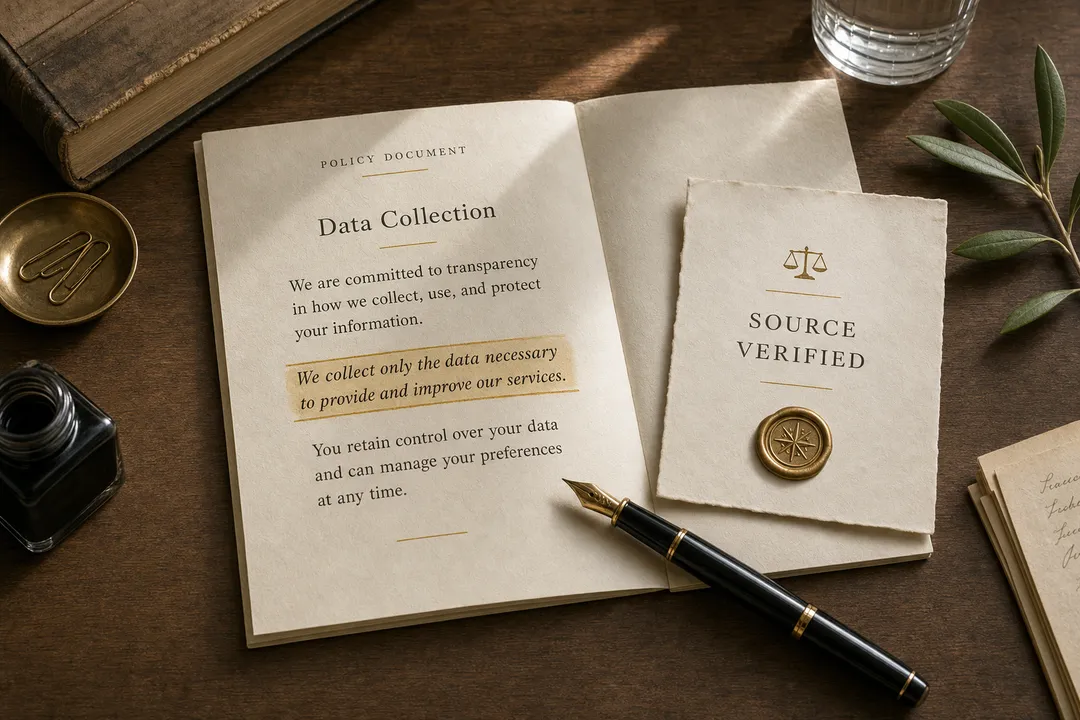
Got receipts? We do. Every finding that surfaces in any Verbaterm policy review requires a direct citation, verbatim. The excerpt has to appear in the source document. If it does not, that claim never becomes a visible finding on a public or private review.
That is the product quality bar, not a marketing flourish. Useful-sounding prose without a source span is treated as a pipeline failure. Informational only. Not legal advice.
What “verbatim” means in the product
On a review card, open Show source evidence. You should see the exact source excerpt, a location cue, and a citation strength when we have one. The same bar applies to concerns and to cited protections that can lift a score.
Ask Verbaterm answers are grounded the same way: substantive claims point back to findings that already survived citation checks. The agent is not a second, uncited summary layer on top of the document.
Why uncited summaries fail the trust test
Generic AI paste-and-summarize tools can sound confident while drifting from the text, inventing soft edges, or skipping the clause that actually matters. When you are deciding whether to Agree, “probably fine” without a sentence is not a receipt.
Verbaterm is built for the opposite habit: name the risk in plain English, then prove it with the company’s own words. For the clauses people usually check first, start at /blog/three-clauses-that-usually-matter and the glossary at /glossary.
Company-fair when nothing is shown
Unsupported model claims stay hidden. They are not framed as “we found an issue but could not prove it,” and they do not punish a company score. When a concern section has zero citation-backed findings after validation, the review shows the green looking-good / all-clear treatment.
Rankings and score-method v4 follow the same rule: only source-backed concerns and protections move the number. See /blog/credit-where-credit-is-due for the ledger, and /how-it-works for the end-to-end review path.
How to check the receipts
Open a published review in the library and expand a finding’s source evidence. Or paste your own policy or agreement and do the same on a private review. If a claim cannot point at a sentence, you should not see it as a finding.
For a short pre-Agree skim, use /blog/what-to-look-for-before-you-agree. When an update email arrives, /blog/we-updated-our-terms walks unilateral amendment first. Follow services you care about so material changes can surface without another cold read of forty pages.